About
An operator-adviser, not a conventional consultant.
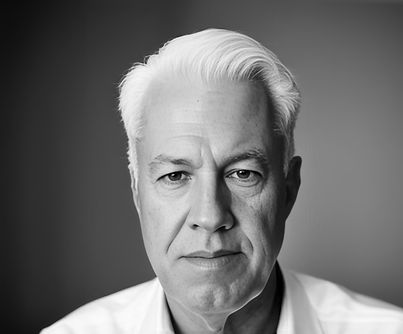
Rob Benson is a technology executive, adviser and operator with more than 35 years in the technology sector, including senior leadership roles building, leading and transforming professional services and technology businesses in New Zealand and internationally.
The proposition
Grow. Perform. Adapt.

GROW. Every business I work with says it wants to grow: more revenue, more customers, more margin. Nobody opens a conversation asking for less. But growth without a real strategy behind it just means doing more of whatever isn't quite working, only faster. The real question is rarely whether you want to grow. It's what's in the way, and whether working harder at the same thing will ever get you there. That's the ground I work on: strategy, propositions, pricing, sales and customer relationships, market development, sometimes acquisitions. Not more activity. A better shape.

PERFORM. Growth gets the attention. Performance is what keeps a business standing up while it happens. Every leader I've worked with eventually hits the same moment: a major customer gone quiet, a restructure that can't be put off any longer, a delivery team stretched further than anyone's willing to say out loud. Thirty-five years running these businesses means I've been on the wrong side of most of those moments myself, and come out the other end. That's what I bring to leadership teams: people, delivery, margins, contracts, and the difficult conversation nobody wants to have first.

ADAPT. Most businesses are still dabbling: a pilot here, a chatbot there, someone quietly playing with prompts on the side. That's not adaptation, it's a science project. Real adaptation means re-engineering the business itself around what AI now makes possible: how you deliver, how you price, how few people it actually takes to do excellent work.Grow and Perform don't stop mattering. They just start happening inside a different set of rules. I don't come at this from theory or a slide deck. I build AI solutions myself, and I've helped shape real businesses around them, so I know the gap between a demo that looks impressive and something that reliably makes money. That's what I bring: not another AI opinion, but someone who's actually done the building.
The shift
The technology services model is changing
For decades, technology services businesses have grown by adding people, increasing utilisation and selling more hours. AI is changing that model. It changes how services are delivered, what customers expect, how expertise is packaged, how much a small team can achieve, and where value is created and captured.
Many, if not most, technology services businesses are responding by building home-grown, bespoke AI tooling of their own: tools to make their existing business a little easier to run (check out my new timesheet app!). Fewer are asking the real question: how does AI change my business? If you're simply making it easier to deliver your existing model, you're not adapting. You're polishing the proverbial.
Not "How do we adopt AI?" but "How does AI change our services business?"
Adaptation is not a replacement for the fundamentals of growing and running a strong services business. It's the contemporary extension of them, applied to delivery models, productivity, pricing and propositions rebuilt around what's now possible.
The realities
Where Grow, Perform and Adapt actually come from
They're not three abstract ideas. They come from the full, sometimes messy reality of running these businesses: acquisitions and integration, legal and contractual issues, HR and people problems, restructuring, underperformance, difficult customers, rebuilding damaged relationships, leadership changes, commercial pressure, delivery problems, margins, strategy and execution. Perform in particular was learned the hard way, not from a textbook. AI adaptation is the newest thread through that same experience, not something bolted on afterward.
How
An operator, not a spectator

I don't advise on business and technology from the sidelines, and in changing times that matters more than ever. I build, test, challenge and prove what actually works, with AI models and agents, Claude Code, Codex, APIs, systems integration, IoT, edge computing, computer vision, automation, networking and cyber security. My own technology environment (home automation, solar and battery management, camera systems and computer vision, access control, local compute) is a genuine testbed, not a talking point.
Can it actually be built? Does it work reliably? What does it cost? Where does it fail? How should it be secured? And, most importantly, does it create enough value to matter?
Recently discussed the setup, AI-assisted workflow included, on The Home Assistant Podcast with Phil and Rohan.
After more than three decades in the industry, and a brief foray into corporate life (great clients, but not a great fit for how I like to work), I'm back doing what I love.
They say opinions are like...

Yes, we've all got one. Mine happen to be grounded in real experience, and an unwavering desire to prove what actually works and what doesn't.
I'll always give you mine, and I'll respect yours. Some of the best outcomes come out of real debate, so don't be shy: tell me what you actually think, and I'll do the same. Directness works best paired with genuine care, not instead of it.
That extends well beyond client work. Developing people to reach their potential is a genuine passion, whether that's founders, their staff, people I'm introduced to, or former colleagues going through something hard. I'd rather offer someone a second chance than write them off, and I'm good in a crisis. Some of that's paid work. A lot of it isn't.
Team
Not a one-man band
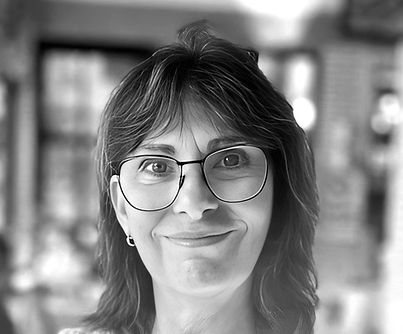
Helene Benson
The back-office wizard behind the scenes, running finance, tax and billing so client work lands smoothly. Someone's got to make sure he practices what he preaches, and give him the time to spend with clients instead of buried in admin. That includes reminding him to track his time, travel and expenses.
The model: operator-adviser
Decades of leadership experience, combined with active experimentation in the technologies reshaping business today. The objective isn't technology for its own sake: it's helping organisations grow stronger businesses, adapt to AI intelligently, create more value for customers, and turn emerging technology into something that actually works.